


Introduction
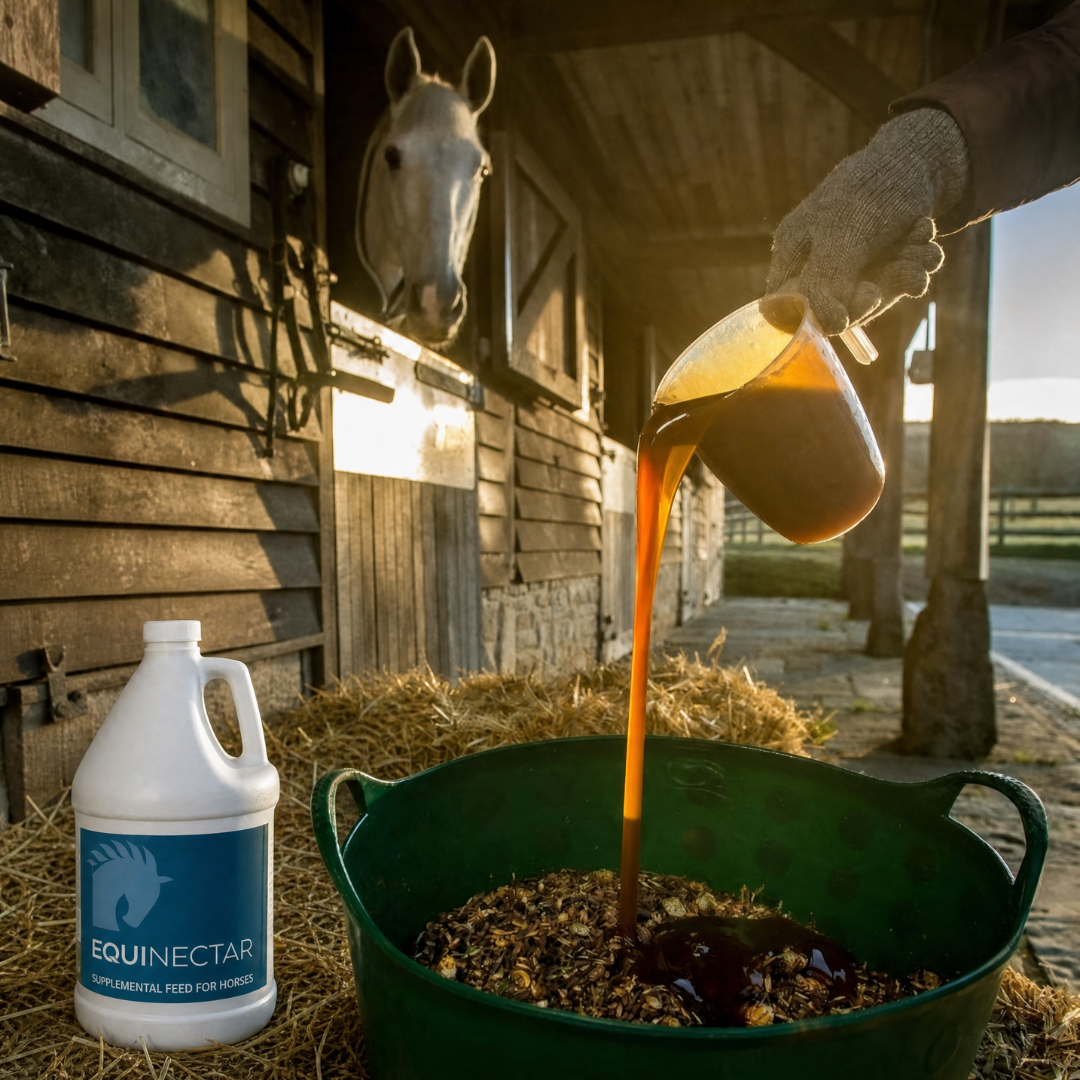
Our research team conducted this investigation at Redwings Horse Sanctuary to examine how grazing on fresh spring grass affects horses' gut bacteria and whether adding a specialized enzyme-rich malt extract supplement (marketed as EquiNectar®) would impact these changes. Horses are particularly vulnerable to laminitis when moved to pastures with fresh grass, likely because of shifts in their gut microbiome, which responds quickly to dietary changes.
Fresh spring grass contains high levels of fructans – chains of fructose molecules – which aren't easily broken down by digestive enzymes in the stomach and small intestine. When these fructans reach the hindgut, certain bacteria use them for energy, leading to bacterial overgrowth. These bacteria produce toxins that can damage the gut barrier. Since EquiNectar® contains several enzymes, including ones that specifically break down fructans, it could theoretically minimize the impact of fresh grass consumption.
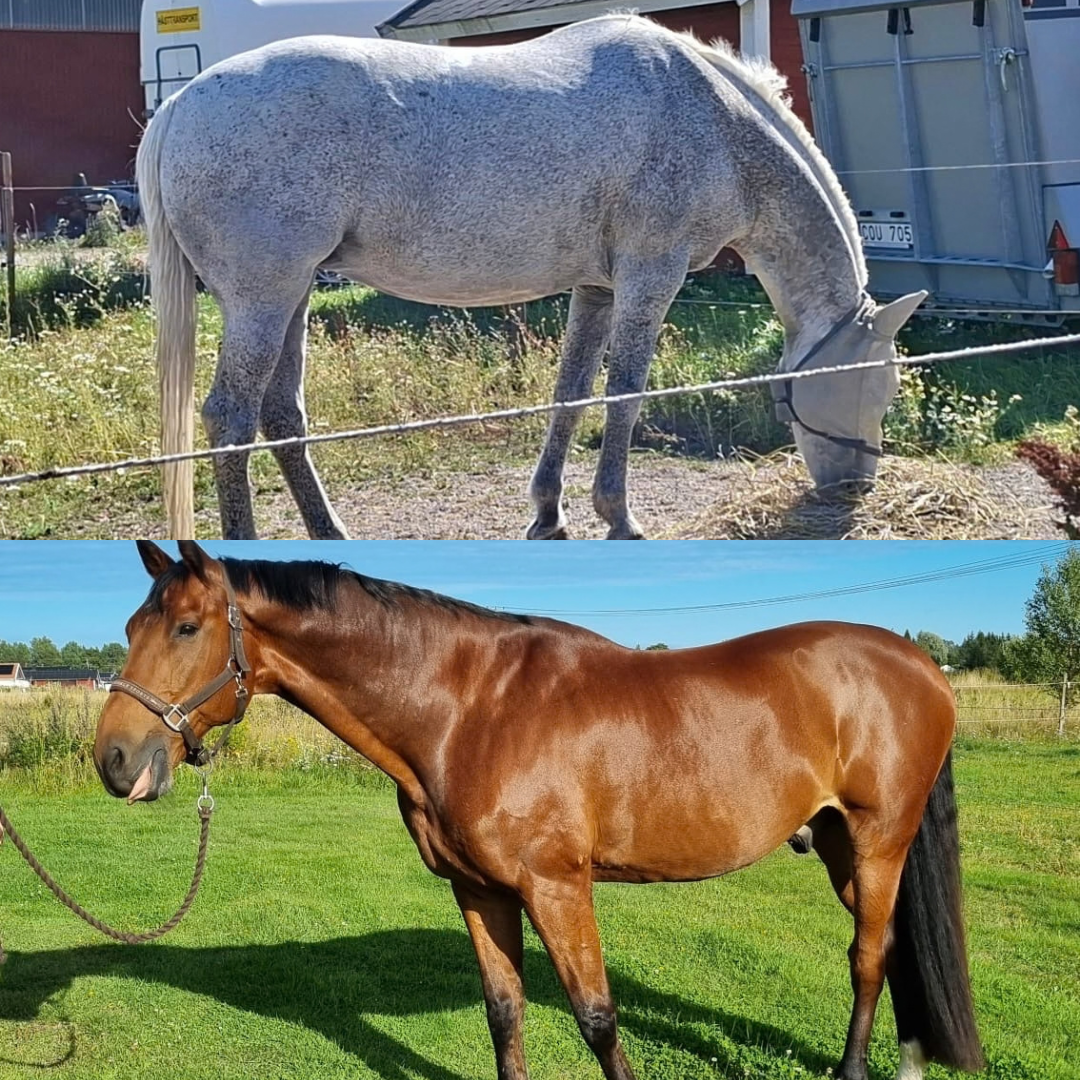
The study involved 45 former recreational horses divided into two groups: a control group (C) of 21 horses and a treatment group (D) of 24 horses. We analyzed bacterial metabolites in their manure samples to assess gut health. At the study's start, both groups showed similar profiles. After six weeks, we found significant differences between the groups and compared to their initial readings, confirming that fresh grass consumption does alter gut bacteria composition.
The treatment group's metabolite profile differed notably from the control group's, indicating that EquiNectar®'s enzymes were successfully breaking down complex carbohydrates from the fresh grass. Additionally, the treatment group's results stayed more consistent with their initial readings, while the control group showed greater variation. This suggests that EquiNectar® helps maintain gut bacterial stability during diet changes. Since dietary changes often trigger digestive issues like colic in horses, EquiNectar® may help prevent these problems by promoting a stable gut environment.
Abstract
We analyzed volatile organic compounds (VOCs) in horse manure before and after a six-week spring grazing period, comparing horses with and without a malted barley enzyme supplement (ERME). This supplement contains several carbohydrate-breaking enzymes, including amylase, maltase, glucanases, and fructanases. Using selected ion flow tube mass spectrometry (SIFT-MS) to analyze manure VOCs, we discovered that both spring grass consumption and the dietary supplement uniquely altered the gut bacteria composition. These findings suggest that the horse gut microbiome (HGM) directly reflects both pasture content and dietary supplements. This relationship should be considered in metabolomic studies, as the HGM may influence various health conditions, including diabetes and obesity.


Share: