


Most horse people have witnessed it at some point: a horse that flattens its ears the moment feed arrives, who stomps and fusses in the stall, or who just seems off despite getting good food and attentive care. For a long time, these kinds of behaviors were written off as temperament issues or gaps in training. But a growing body of research tells a more complicated story. It turns out that your horse's emotional life, the way they communicate it through subtle changes in their body and face, and even the behavioral problems that frustrate owners and trainers most, may have a direct connection to what is going on inside their digestive system.
What Your Horse's Face Is Telling You
A landmark study published in PLOS ONE showed that AI can now identify specific emotional states in horses by analyzing their facial expressions alone, achieving 76% accuracy across four states: baseline, positive anticipation, disappointment, and frustration.[1] This research expanded on foundational work by Ricci-Bonot and Mills,[2] who used the Horse Facial Action Coding System (EquiFACS) to map out the precise facial movements that show up alongside frustration and disappointment during mealtimes.
One of the most telling aspects of these findings is the timing. These emotional responses cluster around food. Horses in a state of frustration, which researchers define as a high-arousal negative reaction to an expected reward being withheld, showed more visible eye whites, rotated ears, head turning, and feeder biting.[2] Disappointment, a quieter and lower-arousal state, looked quite different, showing up as blinking, nostril lifting, tongue movement, chewing, and licking.[2]
None of these signals appear to be random. These are measurable, science-backed signals that a horse is in emotional distress, and that distress is often tied directly to the feeding context. The researchers themselves pointed out that the period just before feeding may be a consistently negative experience for many horses rather than the positive one we might assume it to be.[2]
Think about it this way: if your horse's gut is already uncomfortable, how does waiting for a meal actually feel to them?
The Connection Between the Gut and the Brain
The equine digestive system is both impressively complex and surprisingly easy to throw off balance. Horses evolved to graze almost constantly, taking in small amounts of fibrous plant material across 16 to 18 hours each day. The way most horses are managed today looks nothing like that. Scheduled grain meals, high-starch concentrates, limited time outside, and restricted hay access all put significant pressure on a digestive system that simply was not designed for this kind of routine.
When digestion starts to break down, the effects spread outward quickly. When starch is not properly broken down in the small intestine, those undigested carbohydrates move into the hindgut and get rapidly fermented by bacteria. That process generates volatile fatty acids and gas, throws off the microbial balance, and can set the stage for hindgut acidosis along with ongoing discomfort and inflammation.
Researchers have now drawn clear connections between the composition of gut microbiota and how horses behave. A large study following 185 sport horses over eight months found that behavioral signs pointing to compromised welfare, including stereotypies, hypervigilance, and aggression, were all significantly tied to gut microbiota composition.[4] The term "microbiability," meaning the share of behavioral variation explained by the gut microbiome, was calculated at 24.2% for oral stereotypies and 16.2% for locomotion stereotypies.[4] In practical terms, more than one quarter of the differences seen in crib-biting behavior could be traced back to what was happening inside the gut.
That same study identified specific bacterial groups that correlated with welfare-related behaviors. Horses showing oral stereotypies had higher levels of certain bacteria including Acinetobacter, Roseburia, and Helicobacter, while horses displaying aggression had elevated levels of lactate-producing bacteria like Streptococcus and Butyrivibrio.[4] The study authors also observed that oral stereotypies, which often develop as a way of coping with feeding frustration and limited movement, may in turn alter the gut environment through the release of stress hormones, further shifting microbial composition in a way that compounds the problem over time.[4]
This is the microbiota-gut-brain axis at work: a two-way channel of communication between the digestive system and the central nervous system that shapes mood, arousal levels, and behavior in meaningful ways.
Why Gut Health Is a Welfare Issue
The welfare implications of all this research are hard to ignore. A qualitative study by Cheung, Mills, and Ventura[3] looked at how equestrians think and talk about the welfare of performance horses and found a recurring and uncomfortable pattern. Many owners recognized that things like stress, agitation, and restricted living conditions were real concerns, yet they tended to rationalize or downplay them as just part of the sport. One participant said it plainly: "That's still 20 hours a day in a box, right? And that kills me sometimes. But my horse is well cared for."
The researchers named this cognitive dissonance, the gap that forms when someone knows a practice may be harmful but continues it anyway.[3] Being deeply embedded in equestrian culture, they argued, normalizes management choices that can steadily wear away at horse welfare, including the ones most likely to affect gut health: limited forage, grain-heavy diets, minimal social contact, and long hours confined to a stall.
When you bring this together with what the facial expression and microbiome studies show, the picture becomes clearer. Horses managed this way are at greater risk of gut imbalance and chronic discomfort. That gut disruption connects to negative emotional states and behaviors that signal compromised welfare.[4] And those emotional states show up in ways we can observe, including pinned ears, white-rimmed eyes, tight nostrils, and biting at feeders,[2] yet they are routinely dismissed as behavioral quirks rather than what they may actually be: signs of real physical and emotional distress.
Treating these facial and physical cues as potential signals of digestive discomfort is not just the scientifically informed approach. It is what responsible horse ownership looks like in practice.
Where EquiNectar Comes In
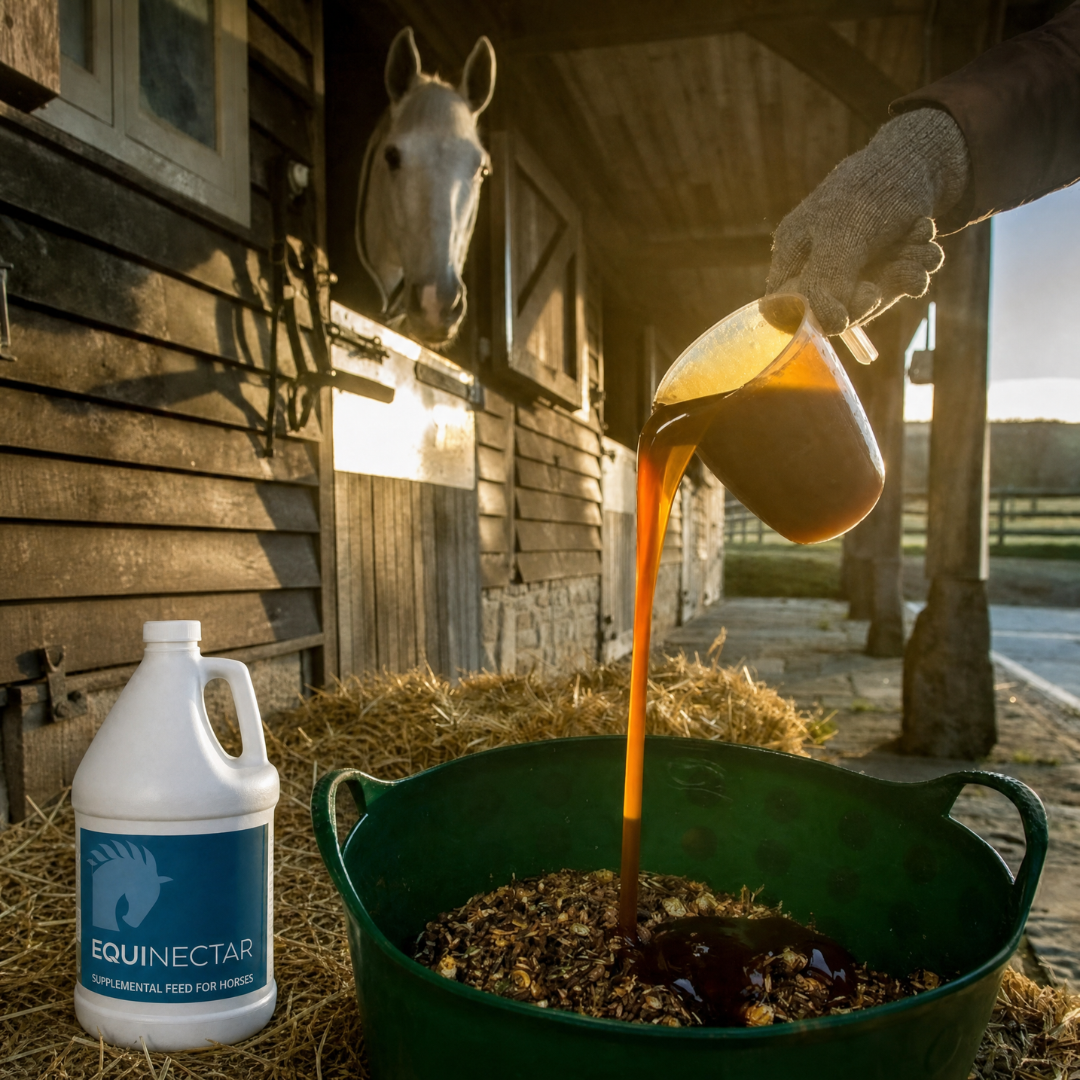
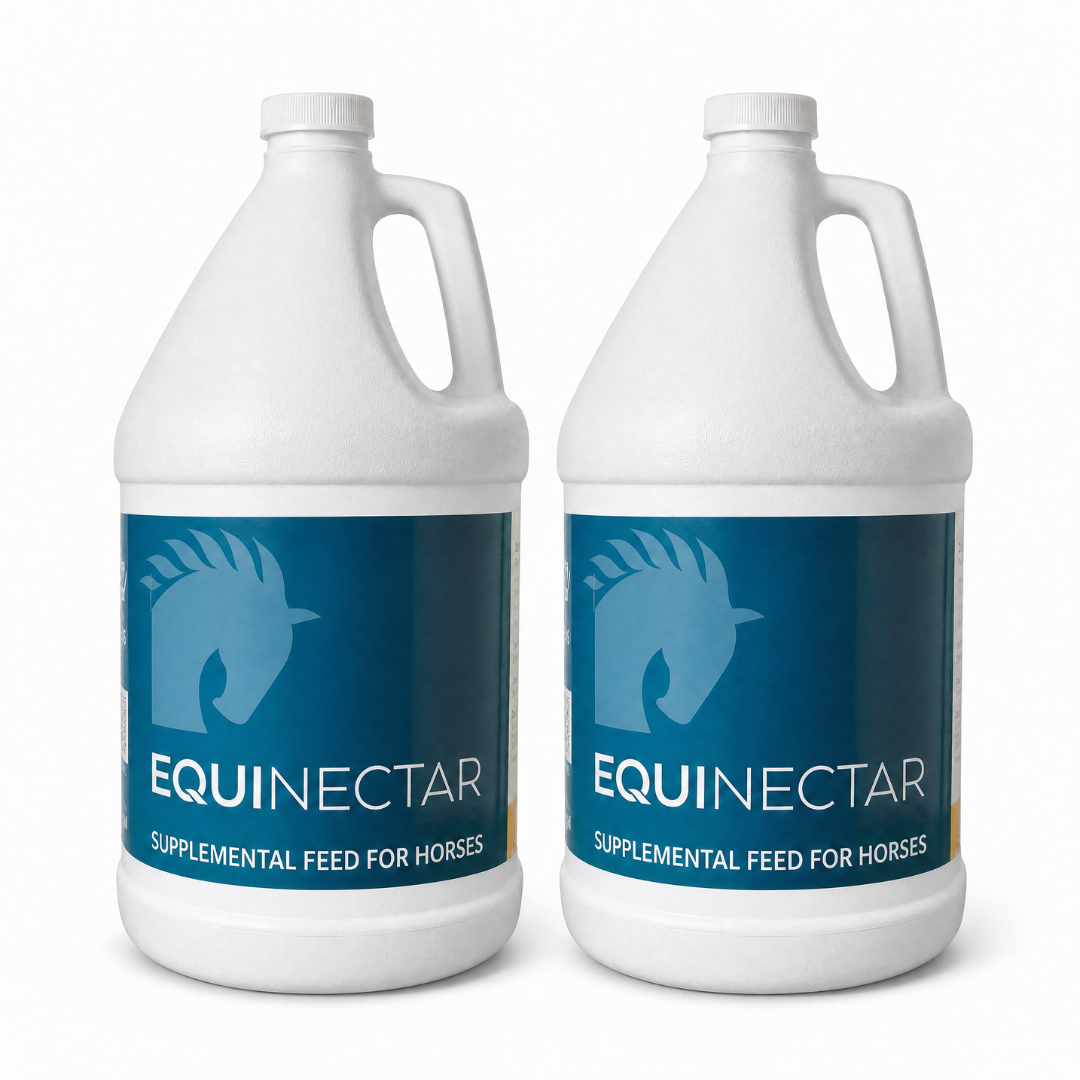
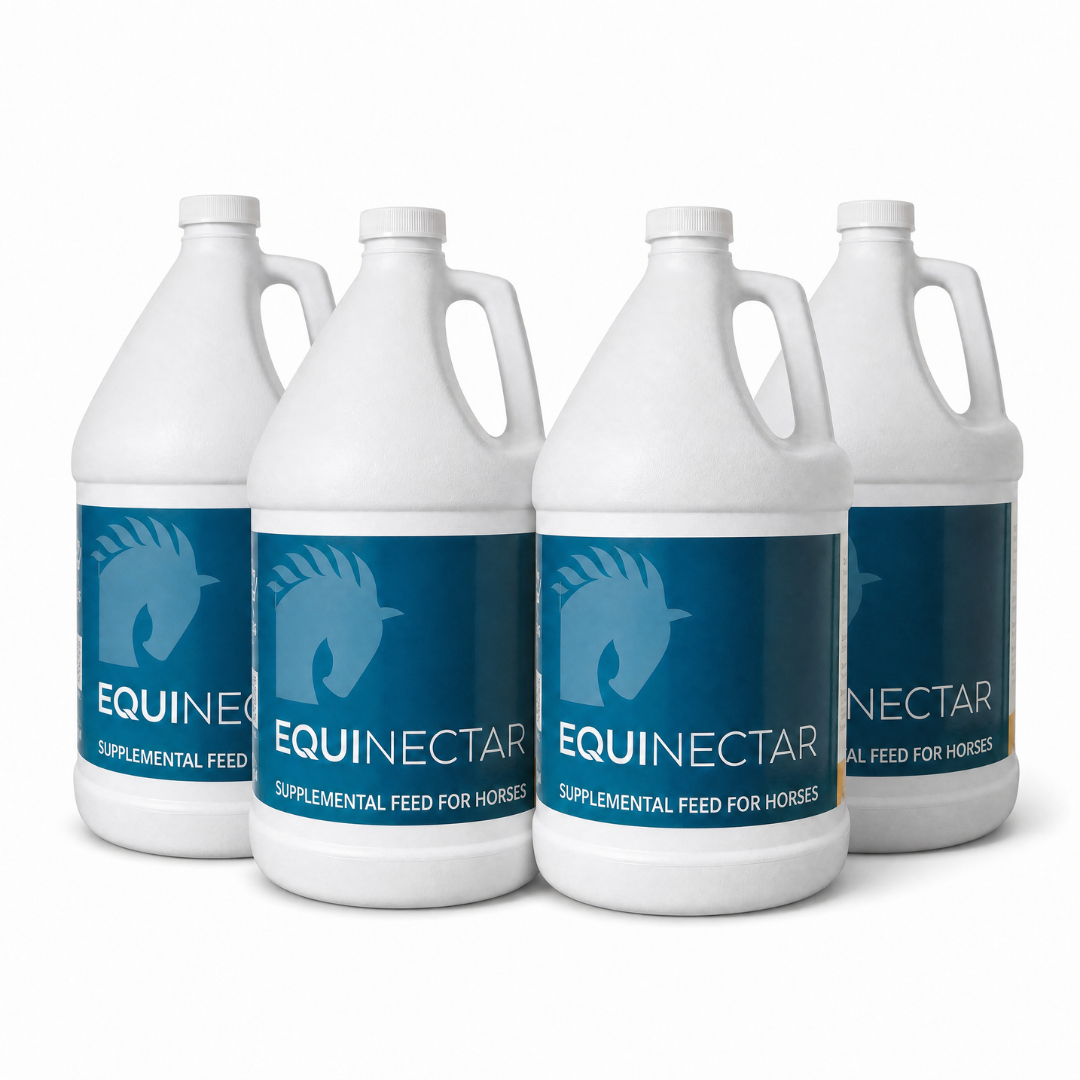
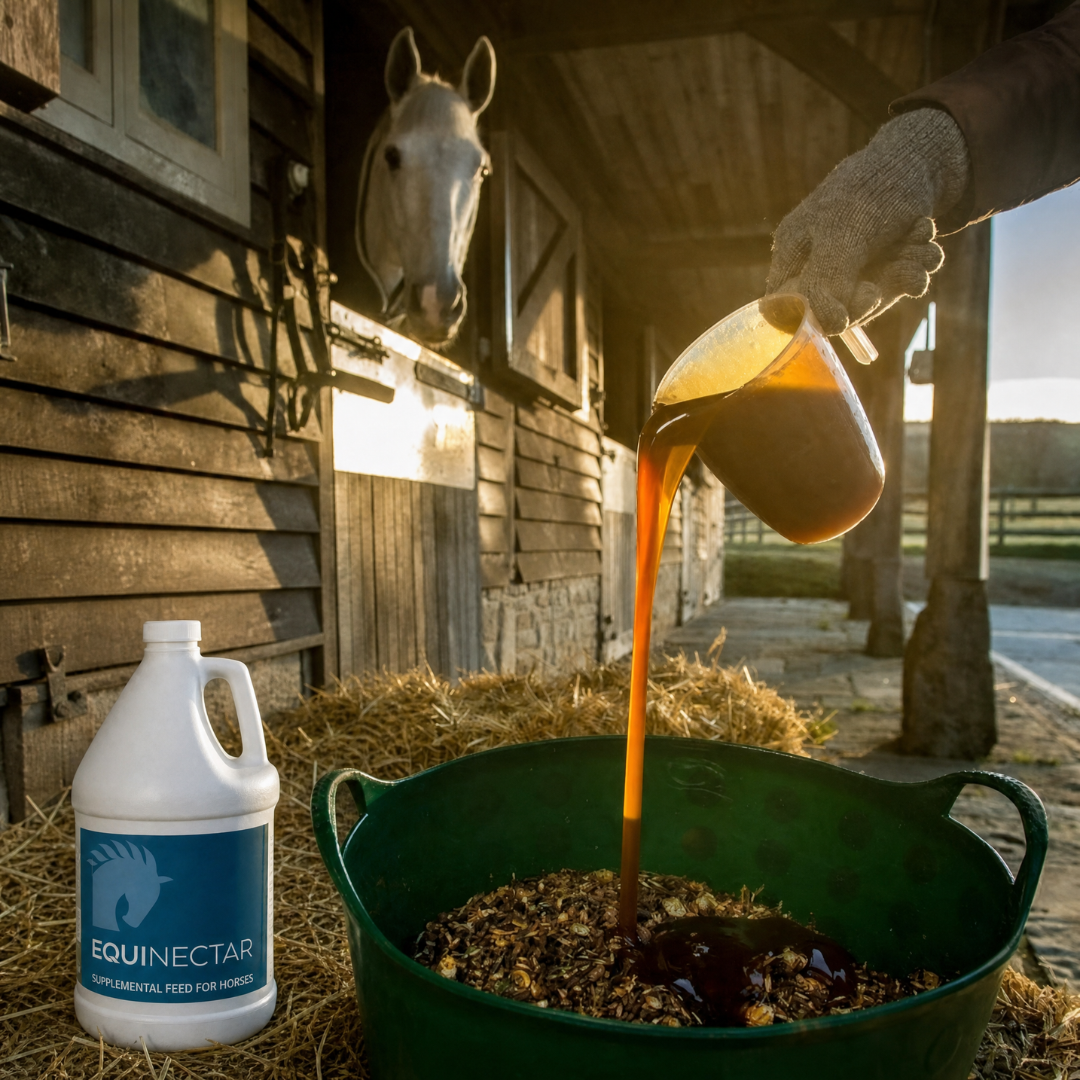
Taking care of your horse's digestive health is one of the most effective things you can do for their overall wellbeing. EquiNectar is a digestive syrup made from malted barley that delivers a targeted blend of active digestive enzymes directly into your horse's feed.
Data from recent clinical trials shows that EquiNectar does not simply cover up behavioral symptoms. It works on the underlying physical causes through a specific Lactate Clearance Mechanism. Here is how each part of that process works:
Taking the Unpredictability Out of Pasture
A lot of what drives frustration in horses at feeding time comes back to the gut experience itself. Pasture may seem like the most natural option, but fructan levels in grass can swing widely, anywhere from 10% to 50%, depending on weather conditions like cold nights followed by sunny days. Those swings can trigger unpredictable stress in the hindgut.
The Modulation EquiNectar's fructanase enzyme pre-digests those variable fructan loads before they ever reach the hindgut.
The Result This helps prevent the sudden lactate spikes and pH drops that may be behind the agitation, ear-pinning, and grass-sensitive irritability many horse owners notice.
Solving the Hindgut Energy Shortage
Horses dealing with ongoing GI sensitivity or uneven performance may be running low on energy at the gut lining level without anyone realizing it.
The Modulation In clinical trials, EquiNectar produced a universal 100% increase in butyrate levels across all healthy subjects, with individual gains ranging from 55% all the way up to 395%.
The Result Butyrate is the main fuel source for colonocytes, the cells that line the large intestine. Increasing it gives the gut lining the energy it needs for real barrier support and improved comfort.
Stabilizing the Gut Environment
When lactate builds up, it can push the hindgut toward an acidic state that suppresses beneficial bacteria and destabilizes the whole microbial ecosystem.
The Modulation EquiNectar helps correct this by reducing lactate-producing bacteria, with Lactobacillus dropping by up to 90% in dysbiotic horses, while simultaneously activating lactate-utilizing species like Selenomonas, which increased in every healthy subject during the trials.
The Result This moves the hindgut away from an acidic and unstable state and toward a more balanced, energy-producing environment. In severely dysbiotic horses, this corresponded with an 80% recovery of propionate, a short-chain fatty acid that plays a role in immune and metabolic regulation.
Unlocking More Minerals From Feed
EquiNectar's phytase enzyme goes beyond carbohydrate digestion by breaking down phytic acid in plant-based feeds. Phytic acid is the compound that binds to and blocks the absorption of key minerals including phosphorus, calcium, and magnesium. When mineral availability is consistently low, muscle function, nerve signaling, and metabolic stability can all suffer.
The Result By freeing up these nutrients at the point of digestion, EquiNectar helps horses get the full mineral value out of every meal, supporting physical comfort and reducing a source of nutritional stress that often goes unrecognized.
Getting More Out of Every Flake of Hay
Hay and forage are the backbone of any horse's diet, but how much nutritional value your horse actually gets depends entirely on how well they can digest it. EquiNectar's cellulase, xylanase, and beta-glucanase enzymes break down the tough cell walls in plant material that horses cannot fully process on their own. More energy and nutrients are released from each pound of roughage, supporting gut fill, keeping beneficial hindgut bacteria well fed through slow fermentation, and reducing the hunger and anxiety that can build up when horses go too long between adequate forage intake.
EquiNectar Contains
- Amylase targets starch, a nutrient horses are not naturally well equipped to digest given that their digestive systems did not evolve alongside grain-heavy diets. Added amylase helps break starch down before it reaches the hindgut, cutting down on the fermentation that drives gas, bloating, and acidosis.
- Fructanase breaks down fructans, the complex sugars found in pasture grasses that tend to spike during lush growing periods and are a well-known trigger for hindgut upset.
- Phytase improves how well the body can use minerals like phosphorus and calcium by breaking apart phytic acid, which would otherwise hold those minerals hostage and prevent absorption.
- Cellulase, xylanase, and beta-glucanase all work together to make forage and hay more digestible, helping your horse pull more nutrition out of their roughage with every meal.
- All B vitamins are included, with particularly high levels of folate and niacin to support overall metabolic health. Niacin contributes to energy metabolism and coat and skin condition, while folate supports red blood cell production and DNA repair. Horses in heavy training or with limited pasture access may require higher levels of B vitamins than usual, and EquiNectar's malted barley base delivers these in a naturally fermented, highly bioavailable form alongside all of the enzyme activity.
For horses that show signs of tension, irritability, or negative facial expressions around feeding time, addressing the possibility of digestive discomfort is a practical and compassionate place to start. Research shows that a well-balanced gut microbiome is meaningfully associated with calmer and more settled behavior.[4] A horse whose digestive system is running well is in a much better position to experience mealtimes as something genuinely positive rather than a trigger for frustration or distress.

Putting It All Together: Emotion, Expression, and Digestion
The science points in one clear direction. Horses have distinct emotional states. They communicate those states through changes we can measure in their faces and bodies.[1][2] Many of those states, especially the ones centered around frustration and discomfort at feeding time, are rooted in the digestive experience. And the gut dysfunction that underlies all of this, including shifts in microbial balance, may be driving both the physical discomfort and the behavioral patterns horse owners observe on a daily basis.[4]
As veterinary behavioral science continues to develop and tools like EquiFACS become more widely used, horse owners have more power than ever to stop treating behavior as a training problem and start asking the more important question: what is my horse actually experiencing, and what is causing it?
For horses competing at any level, the answer really matters. A horse whose hindgut is running acidic, whose microbial balance has shifted toward lactate-producing species, and who does not have enough butyrate to keep the gut barrier intact is not just uncomfortable. That horse is very likely working below their full physical and mental capacity. Inconsistent performance, resistance under saddle, and difficulty focusing in the arena may all trace back to the same internal conditions that produce mealtime frustration and pinned ears at the stall door. EquiNectar's clinically supported modulation of these specific mechanisms gives owners and trainers a targeted, non-invasive option for improving not just digestive health but the full expression of what their horse is capable of.
If your horse is showing signs of digestive discomfort, whether that shows up as loose manure, girthiness, a poor appetite, or behavioral shifts around feeding, EquiNectar offers a practical and evidence-supported way to address gut health from the inside out.
A horse with a healthy gut is not just a horse that digests well. It is a horse with a real chance of feeling well too.
Conclusion: Working on the Root Causes
The cognitive dissonance many horse owners feel, that uncomfortable gap between providing excellent care and still seeing ongoing agitation or distress, can look very different when viewed through a biological lens. Clinical evidence around ERME modulation suggests that many of the outward signs of frustration we observe may actually reflect physiological responses to hindgut instability or temporary lactate buildup, not fixed behavioral traits.
When we address those internal imbalances directly, we stop just managing symptoms and start genuinely supporting the horse's digestive physiology. Helping your horse feel comfortable on the inside may improve their behavior, their performance, and their overall wellbeing, and it can turn the feeding experience back into the positive event it was always supposed to be.
References
[1] Feighelstein, M., Ricci-Bonot, C., Hasan, H., Weinberg, H., Rettig, T., Segal, M., Distelfeld, T., Shimshoni, I., Mills, D. S., & Zamansky, A. (2024). Automated recognition of emotional states of horses from facial expressions. PLOS ONE, 19(7), e0302893. https://journals.plos.org/plosone/article?id=10.1371/journal.pone.0302893
[2] Ricci-Bonot, C., & Mills, D. S. (2023). Recognising the facial expression of frustration in the horse during feeding period. Applied Animal Behaviour Science, 265, 105966. https://www.sciencedirect.com/science/article/pii/S0168159123001387
[3] Cheung, E., Mills, D., & Ventura, B. A. (2025). "But my horse is well cared for": A qualitative exploration of cognitive dissonance and enculturation in equestrian attitudes toward performance horses and their welfare. Animal Welfare, 34, e50. https://www.cambridge.org/core/...
[4] Mach, N., Ruet, A., Clark, A., Bars-Cortina, D., Ramayo-Caldas, Y., Crisci, E., Pennarun, S., Dhorne-Pollet, S., Foury, A., Moisan, M. P., & Lansade, L. (2020). Priming for welfare: gut microbiota is associated with equitation conditions and behavior in horse athletes. Scientific Reports, 10(1), 8311. https://doi.org/10.1038/s41598-020-65444-9

Share: