

Researchers at Lincoln Memorial University's College of Veterinary Medicine have published a landmark review exploring the role of short-chain fatty acids (SCFAs) in equine gut health—with a sharp focus on colic, one of the most dangerous and widespread conditions affecting horses across the United States.
What this study covers: SCFAs, colic, and hindgut inflammation
Short-chain fatty acids—primarily acetate, propionate, and butyrate—are produced in the hindgut when beneficial bacteria ferment dietary fiber. The paper details how these critical molecules maintain gut wall integrity, regulate immune function, and suppress inflammation throughout the digestive tract.
Most importantly, the study traces the direct pathway by which disruption to SCFA production—triggered by high-starch or low-fiber diets, stress, or microbial imbalance—can contribute to colic pathophysiology. This means that what your horse eats, and how well their hindgut microbiome functions, plays a measurable role in colic risk.
Key findings at a glance
- Dietary starch overflow and fructan fermentation are identified as primary triggers for hindgut dysbiosis
- Dysbiosis reduces SCFA output, increases gut permeability, and promotes systemic inflammation
- High-forage diets, prebiotics, and probiotics are reviewed as evidence-based strategies for restoring SCFA production
- Emerging therapies such as fecal microbiota transplantation (FMT) are also discussed
Why hindgut health matters for American horse owners
Colic is the leading medical cause of death in horses, and it affects horses across every discipline—from trail riding and barrel racing to dressage and show jumping. Understanding the molecular mechanisms behind it is no longer just academic: this research gives horse owners and veterinarians a clearer picture of why gut microbiome support is a front-line strategy, not an afterthought.
The authors' findings around starch overflow are particularly relevant for horses on grain-heavy performance diets, a common feeding practice in the U.S. When starch bypasses proper digestion in the small intestine and reaches the hindgut, it fuels bacterial fermentation patterns that crowd out SCFA-producing microbes—setting off a chain reaction that can end in inflammation, laminitis, or colic.
Why we're sharing this independent research
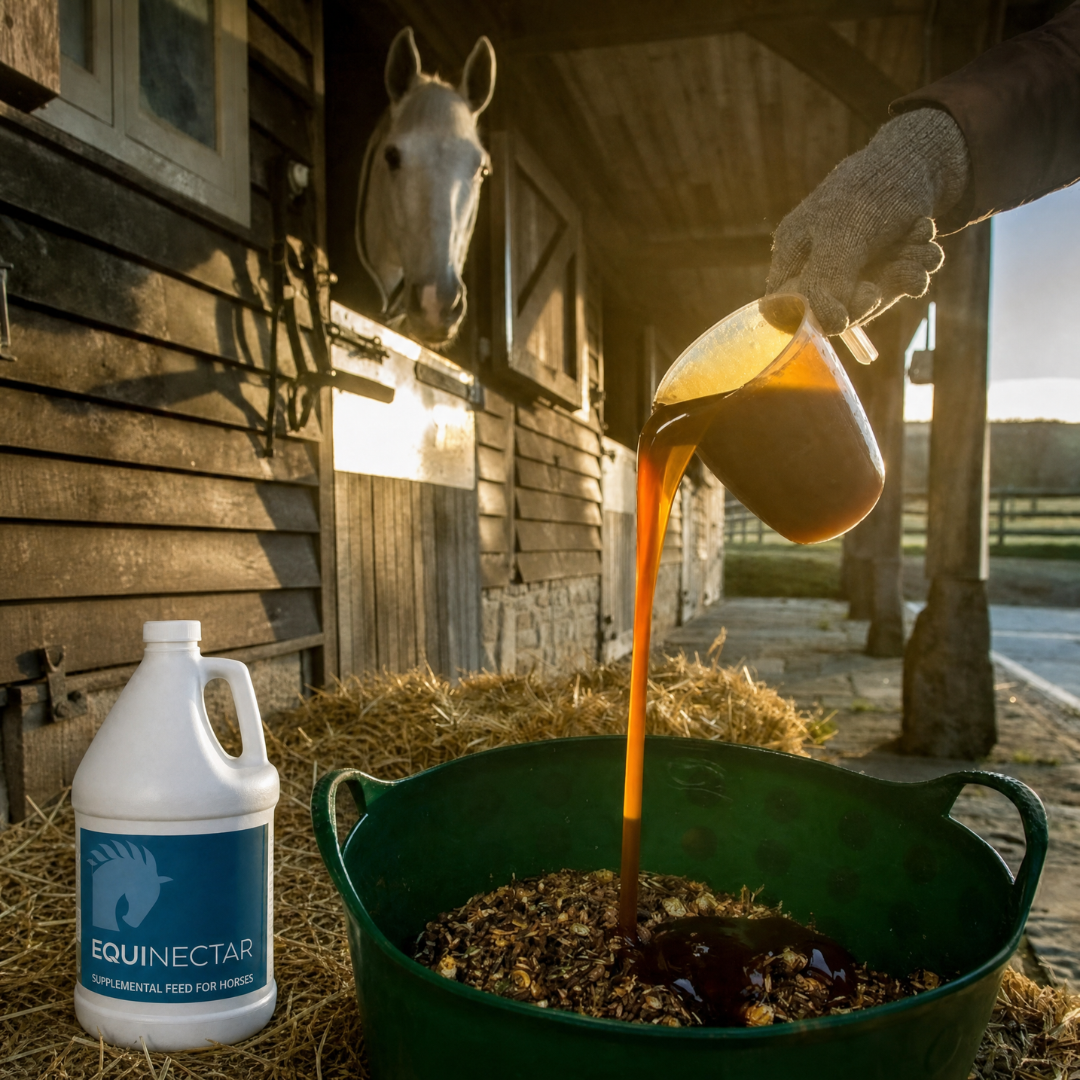
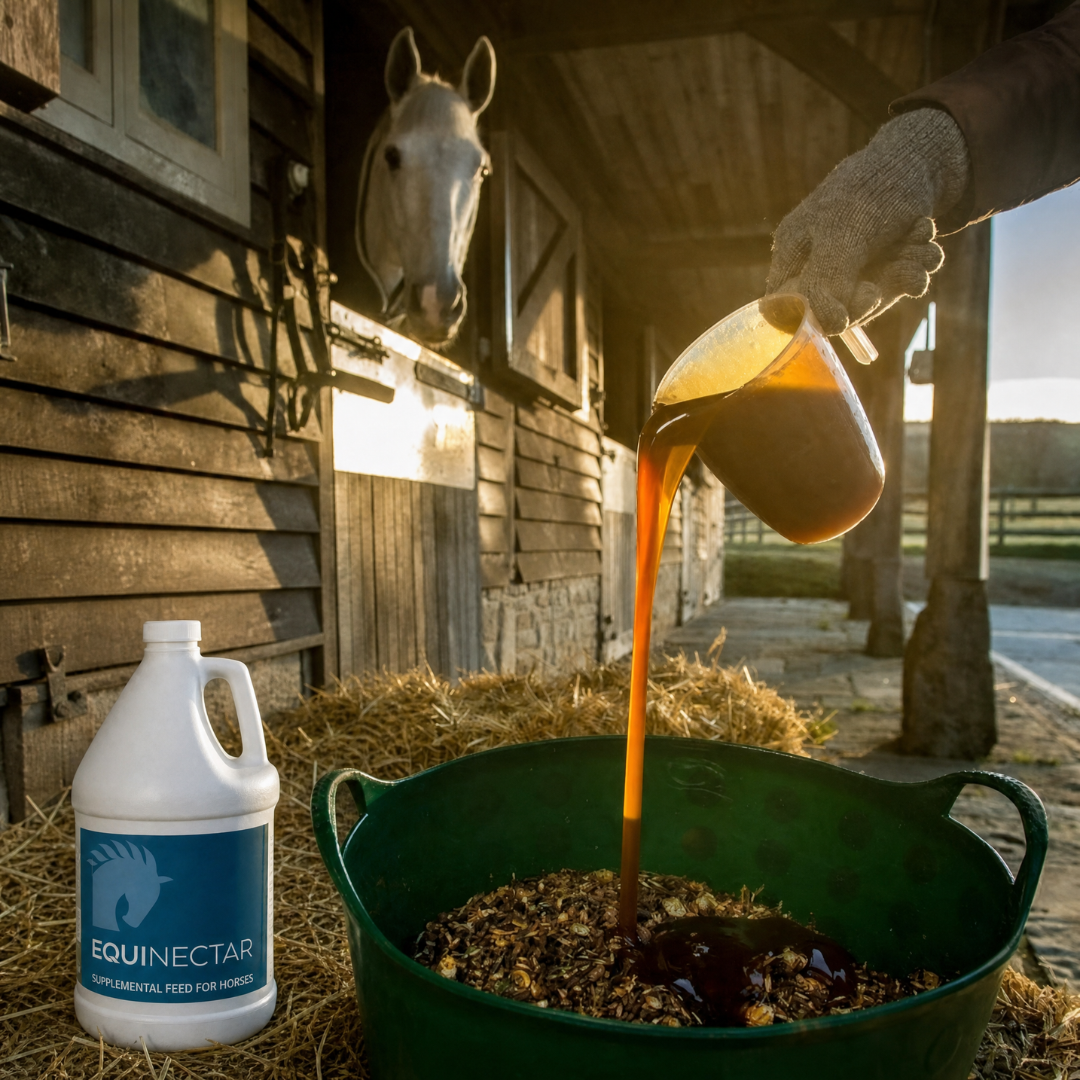
This study was not conducted by or in association with Tharos. We're sharing it because it provides some of the clearest, most up-to-date independent scientific context available for understanding why hindgut health matters—and why the mechanism behind EquiNectar is directly relevant to some of the most serious challenges facing horse owners today.
The paper is open access, meaning it's free for anyone to read in full. We encourage you to share it with your veterinarian or equine nutritionist.
Read the full study (open access): https://doi.org/10.3390/ani15233482

Share: